




Tek Screws and Fire Dampers: The Fixing Problem Nobody Talks About
Fire dampers are one of the least visible parts of a building's fire strategy, and the way they are fixed into ductwork rarely gets a second look. But the fixings matter. When a fire damper is secured with the wrong type of screw — most commonly a self-drilling tek screw — the whole assembly can fail to perform the way it was designed to. This post explains what tek screws are, why they cause problems around fire dampers, and what a responsible person should be looking for.
What Is a Tek Screw?
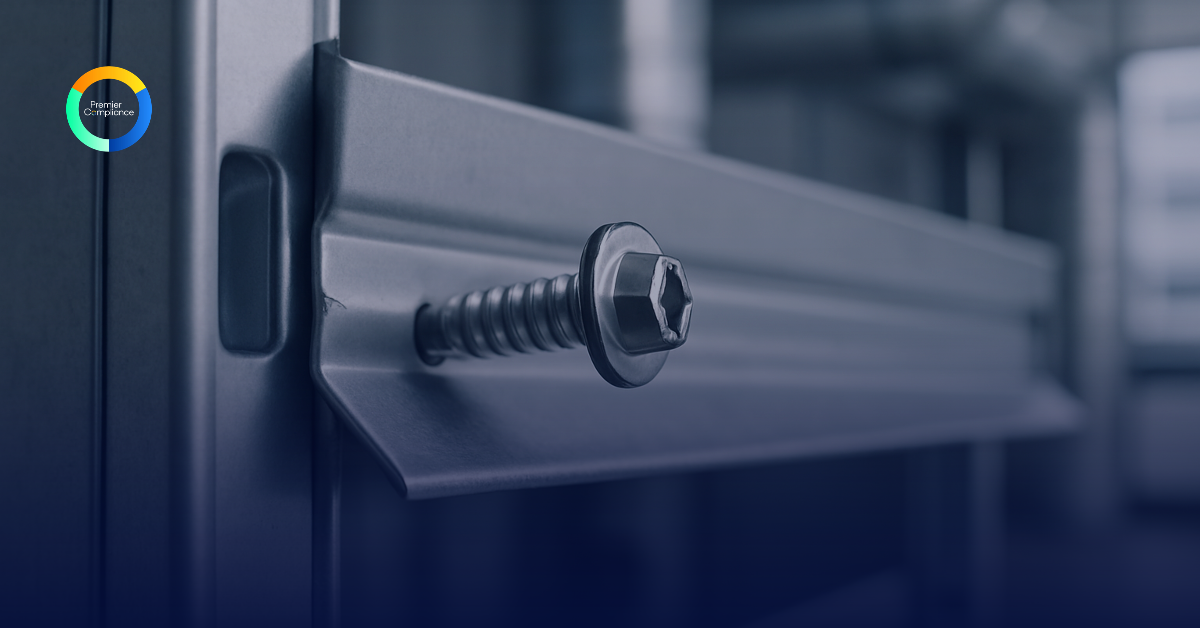
A tek screw is a self-drilling, self-tapping screw with a drill-bit tip. It cuts its own hole through sheet metal without the need for pre-drilling, which makes it fast and cheap to install. For general HVAC ductwork assembly, that convenience is exactly why they are used everywhere.
The problem is that a fire damper is not general ductwork. It is a fire-resisting product that has been tested and certified as a complete system, and the way it is fixed forms part of that certification.
Why Tek Screws Cause Problems at Fire Dampers
A fire damper is only certified to perform to its fire-resistance rating when it is installed in line with the manufacturer's instructions. Those instructions specify the fixing method, the type of fixing, and often the spacing. Deviating from them can invalidate the product's certification and, more importantly, compromise its performance in a fire.
Common issues we find on site include:
- Fixings that penetrate the damper casing incorrectly, interfering with the blade or curtain mechanism so it cannot close fully or freely.
- Tek screws used to fix the damper to a breakaway joint or retaining angle where the manufacturer specified a different fixing, changing how the assembly behaves under heat.
- Screws driven into moving parts, jamming the damper in the open position — the single worst failure mode, because it means smoke and fire pass straight through.
- Over-fixing or under-fixing, where the installer has simply used whatever was to hand rather than following the tested detail.
A damper that cannot close is not a fire damper. It is a hole in a fire-rated wall or floor.
The Testing Angle
Under the Fire Safety (England) Regulations 2022, the responsible person has duties around the maintenance of fire safety measures, and fire dampers fall squarely within that. Fire dampers should be tested at least annually in line with BS 9999, with a drop test to confirm the damper closes and re-sets correctly.
This is exactly where fixing problems surface. A damper that has been secured with an inappropriate tek screw often fails its drop test because the screw is fouling the mechanism. The test does its job — but only if someone is actually carrying it out and recording the result.
If your damper testing reports show dampers that consistently fail to close, or notes that access could not be gained to confirm operation, that is a signal to look at how the units were installed in the first place.
What Good Looks Like
When a fire damper is installed and fixed correctly, you should expect:
- Fixings that match the manufacturer's installation instructions for that specific product.
- No fixings penetrating or obstructing the blade, curtain or spring mechanism.
- A retaining frame or angle fixed as the certification requires, so the assembly performs as tested.
- Clear access to the damper for annual drop testing, with an inspection hatch where needed.
What the Responsible Person Should Do
You do not need to be able to identify a tek screw at a glance. What you do need is confidence that the people installing and testing your fire dampers know the difference and are working to the manufacturer's detail.
Practical steps:
- Ask for the installation certification and manufacturer instructions for your fire dampers, not just a testing certificate.
- Review your damper test reports properly. Look for failures, "no access" entries, and any notes about the fixing or condition of the unit.
- Where dampers are failing, get the installation checked rather than simply re-testing and hoping. A damper that fails because of a bad fixing will keep failing until the fixing is corrected.
- Keep records. The fixing method, the test results and any remedial work all form part of the golden thread of information you are expected to hold.
If you are unsure whether your fire dampers have been installed and fixed to the manufacturer's detail, that uncertainty is itself worth acting on.